





Over the years, I have worked on multiple CMDB transformation and governance initiatives across different organizations. One thing I have consistently observed is that implementing a CMDB (configuration management database) is relatively easy – maintaining a healthy and trusted CMDB is the real challenge.
Many organizations invest heavily in Discovery, integrations, and automation, yet still struggle with duplicate Configuration Items (CIs), missing ownership information, inaccurate relationships, and inconsistent service mapping. In almost every case, the root cause comes back to a lack of understanding of CMDB fundamentals, governance, and service modeling.
That is exactly why I am excited about the CIS-Data Foundations, CMDB, and CSDM certification. Unlike certifications that focus primarily on features and terminology, this exam validates concepts that are directly applicable to real-world ServiceNow implementations.
Whether you are a CMDB administrator, ITOM engineer, architect, consultant, or developer, this certification helps build a strong foundation for managing and governing configuration data effectively.
In this article, we will cover:
- Official exam domains.
- Important preparation topics.
- Practical hands-on strategy.
- Common mistakes.
- Recommended resources.
- Study plan for beginners and intermediate learners.
What to Expect on the Exam
The CIS-Data Foundations, CMDB, and CSDM certifications validate a candidate’s understanding of:
- CMDB architecture.
- Configuration Item management.
- Identification and Reconciliation Engine (IRE).
- Data ingestion methods.
- CMDB governance.
- CMDB health and remediation.
- Relationship management.
- Service Mapping concepts.
- Common Service Data Model (CSDM).
The exam focuses heavily on practical understanding rather than theoretical memorization. Candidates are expected to understand how CMDB behaves in real implementations and how different platform capabilities work together.
According to the official blueprint, the exam covers five major domains:
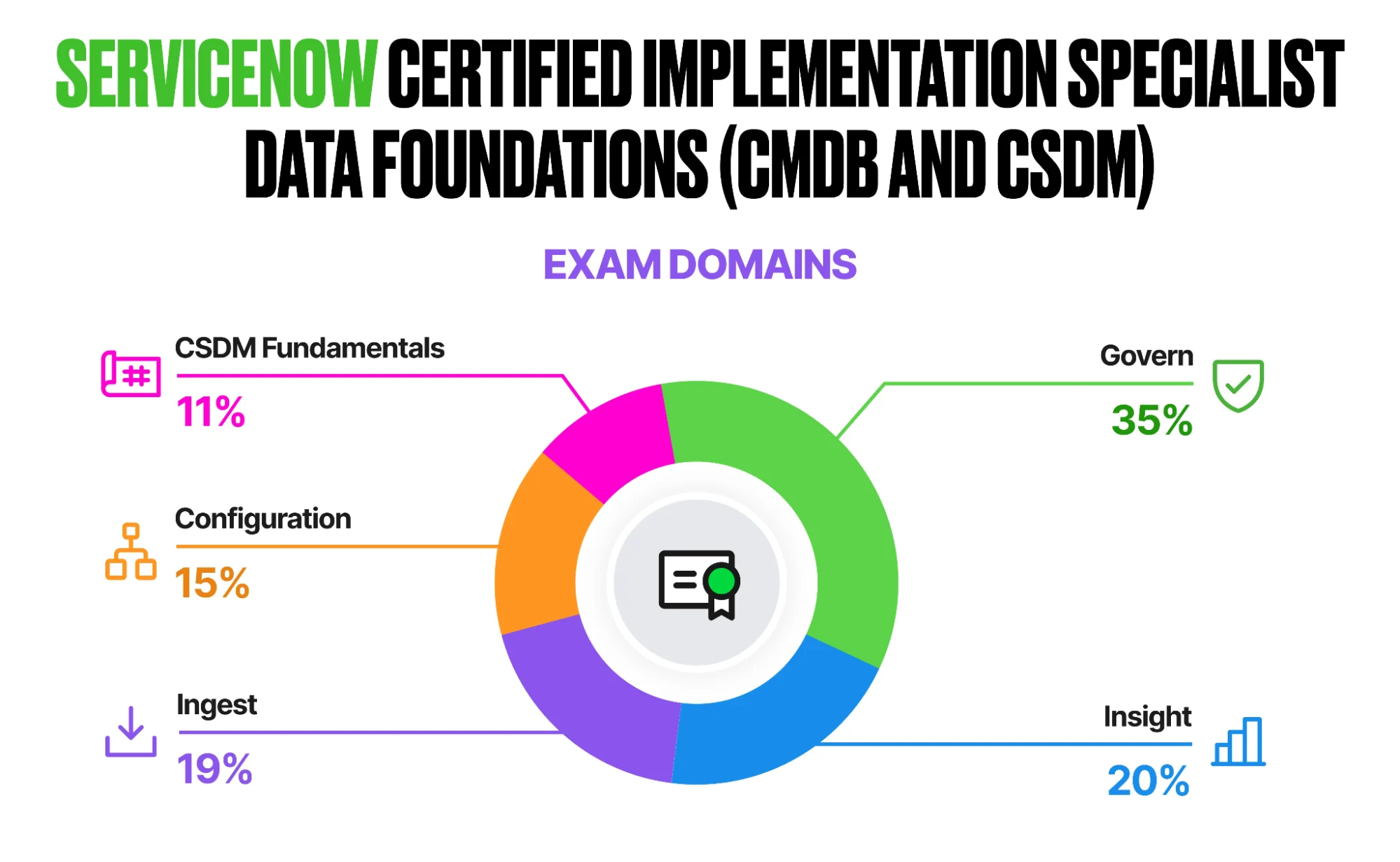
The governance and operational understanding sections carry the highest weightage, so candidates should avoid focusing only on Discovery or CMDB basics.
Who Should Take This Certification?
From my experience, this certification is particularly valuable for professionals who are moving beyond administration and starting to work on enterprise-scale ServiceNow implementations.
Even if your current role is focused on ITSM or platform administration, understanding how CMDB data is structured, governed, and consumed will become increasingly important as organizations continue investing in ITOM, AIOps, Service Operations Workspace, and AI-driven initiatives.
This certification is ideal for:
- CMDB Administrators.
- ServiceNow ITOM professionals.
- Discovery engineers.
- Service Mapping engineers.
- Solution architects.
- Technical consultants.
- Platform owners.
- Developers working with CMDB integrations.
It is especially valuable for professionals involved in:
- CMDB governance initiatives.
- Data quality improvement.
- CSDM adoption.
- Discovery implementation.
- Service Graph Connector integrations.
- Asset and CI alignment.
Even if you are not directly working as a CMDB administrator, understanding these concepts is becoming increasingly important across ServiceNow implementations.
Deep Dive into the Exam Domains
The Classification section focuses on CMDB structure and how Configuration Items (CIs) are organized and identified.
Key topics include:
- CMDB basics.
- CI classes and hierarchy.
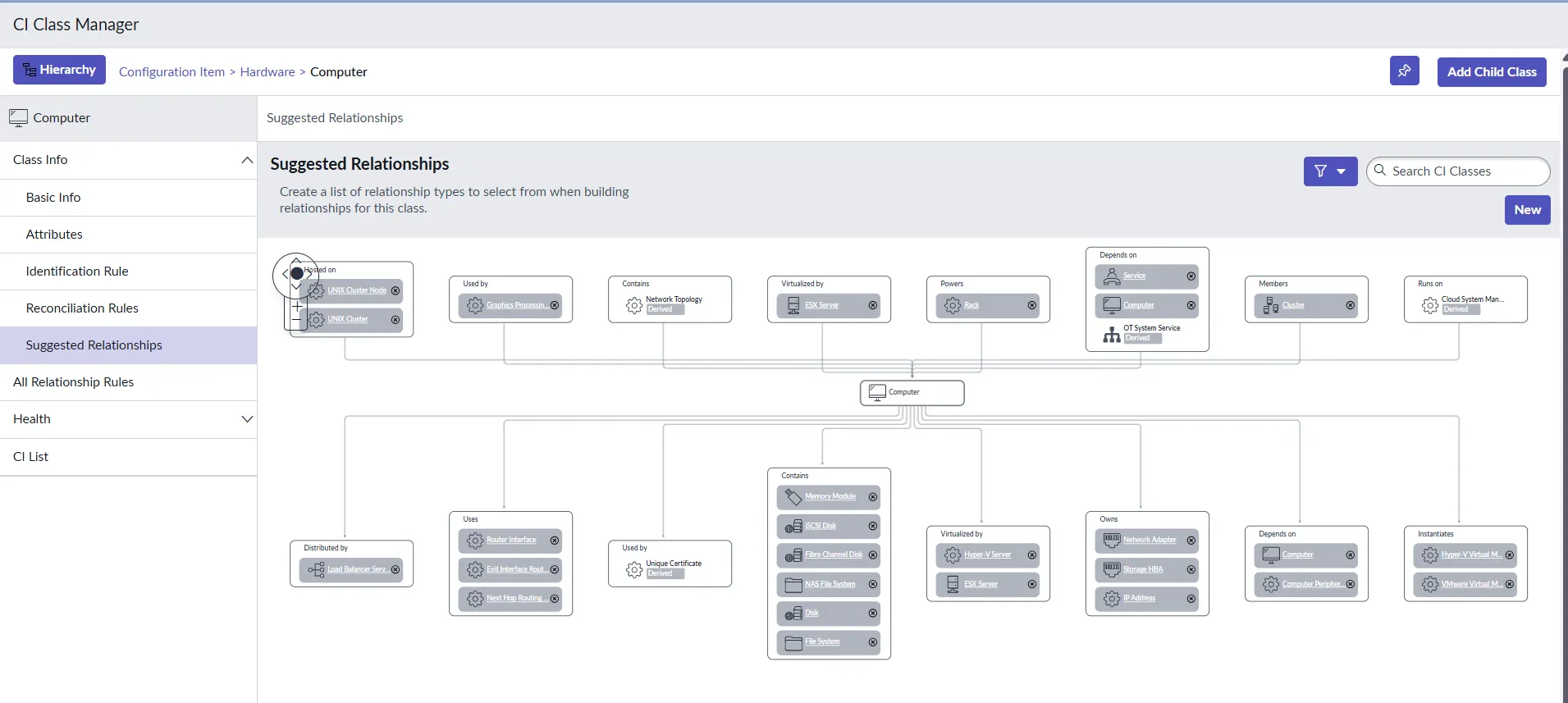
- Class Manager.
- Relationships.
- Suggested relationships.
- CMDB 360.
- Identification and Reconciliation Engine (IRE).
- Reclassification.
- Multi-source CMDB.
The community preparation notes also emphasize:
- Class hierarchy.
- Class Manager.
- Identification rules.
- Reconciliation logic.
- Multi-source CMDB understanding.
Understanding CI Classes and Hierarchy
When mentoring professionals preparing for this certification, I often find that candidates underestimate the Classification domain. Many assume that understanding CI classes simply means memorizing the CMDB hierarchy.
In reality, ServiceNow expects you to understand why classes exist, how inheritance works, and how classification decisions impact reporting, governance, Discovery outcomes, and service visibility.
My recommendation is to spend time exploring Class Manager in your Personal Developer Instance rather than relying solely on study notes. The hands-on experience makes exam scenarios much easier to understand.
Candidates should understand:
- Parent-child class relationships.
- Principal classes.
- Suggested relationships.
- CI inheritance.
Visual: Example of CMDB Class Hierarchy
Understanding Relationships and IRE
If there is one topic that repeatedly appears in both projects and certification discussions, it is the Identification and Reconciliation Engine (IRE).
I have seen many organizations struggle with duplicate CIs despite having Discovery and integrations in place. The issue is rarely the data source itself. More often, it comes down to identification rules, reconciliation priorities, and data ownership strategies.
Understanding IRE is not only important for the exam but also one of the most valuable skills you can develop for long-term CMDB success.
IRE is one of the most important concepts in the certification.
You should clearly understand:
- Identification rules.
- Criteria attributes.
- Rule priority.
- Reconciliation behavior.
- Duplicate prevention.
- Reclassification logic.
Practical Preparation Tip
Use your Personal Developer Instance (PDI) to:
- Create CI relationships manually.
- Explore Class Manager.
- Configure sample identification rules.
- Observe reconciliation behavior.
Hands-on practice is extremely important for this section.
This domain focuses on how data enters the CMDB.
Important topics include:
- ServiceNow Discovery.
- MID Server.
- Service Graph Connectors.
- Import Sets.
- IntegrationHub ETL.
- Relationship population.
- Asset and CI alignment.
- Non-discoverable data.
The preparation notes also highlight:
- Discovery relationships.
- SGC relationships.
- IRE relationships.
- Manual relationship management.
One of the biggest misconceptions I encounter is the belief that Discovery is the only way data enters the CMDB.
Modern ServiceNow implementations typically use a combination of Discovery, Service Graph Connectors, IntegrationHub ETL, import processes, and custom integrations.
The exam reflects this reality by focusing on how data from multiple sources is managed and reconciled rather than concentrating exclusively on Discovery.
Discovery and MID Server
Candidates should understand:
- Discovery flow.
- MID Server communication.
- Discovery patterns.
- ECC Queue basics.
- Relationship population through Discovery.
Service Graph Connectors and Import Methods
You should also understand:
- How Service Graph Connectors ingest data.
- Difference between Discovery and SGC.
- Import Set processing.
- IntegrationHub ETL basics.
- Relationship creation during ingestion.

Practical Preparation Tip
Spend time exploring:
- Discovery schedules.
- Patterns.
- Service Graph Connector setup.
- Import processing.
- Relationship population behavior.
Many exam questions are scenario-based and require operational understanding.
If I had to recommend one domain that deserves extra attention during preparation, it would be Govern.
Not only does it carry the highest exam weightage, but it also represents one of the most common challenges organizations face after implementing CMDB.
In my consulting experience, organizations often achieve excellent Discovery coverage but continue struggling with duplicate records, stale data, missing ownership, and poor compliance scores.
This is where governance becomes critical. A CMDB is only valuable when the data can be trusted. Understanding health metrics, remediation processes, ownership models, and governance workflows is essential for both the exam and real-world success.
Topics include:
- CMDB Health Dashboard.
- CMDB Health KPI.
- Correctness.
- Completeness.
- Compliance.
- Duplicate remediation.
- CMDB Data Manager.
- Deduplication tasks.
- Governance planning.
- CMDB Workspace.
The preparation notes strongly emphasize:
- The 3 Cs: Completeness, correctness, and compliance.
- Remediation playbooks.
- Duplicate remediation tools.
- Governance planning.
CMDB Health Dashboard
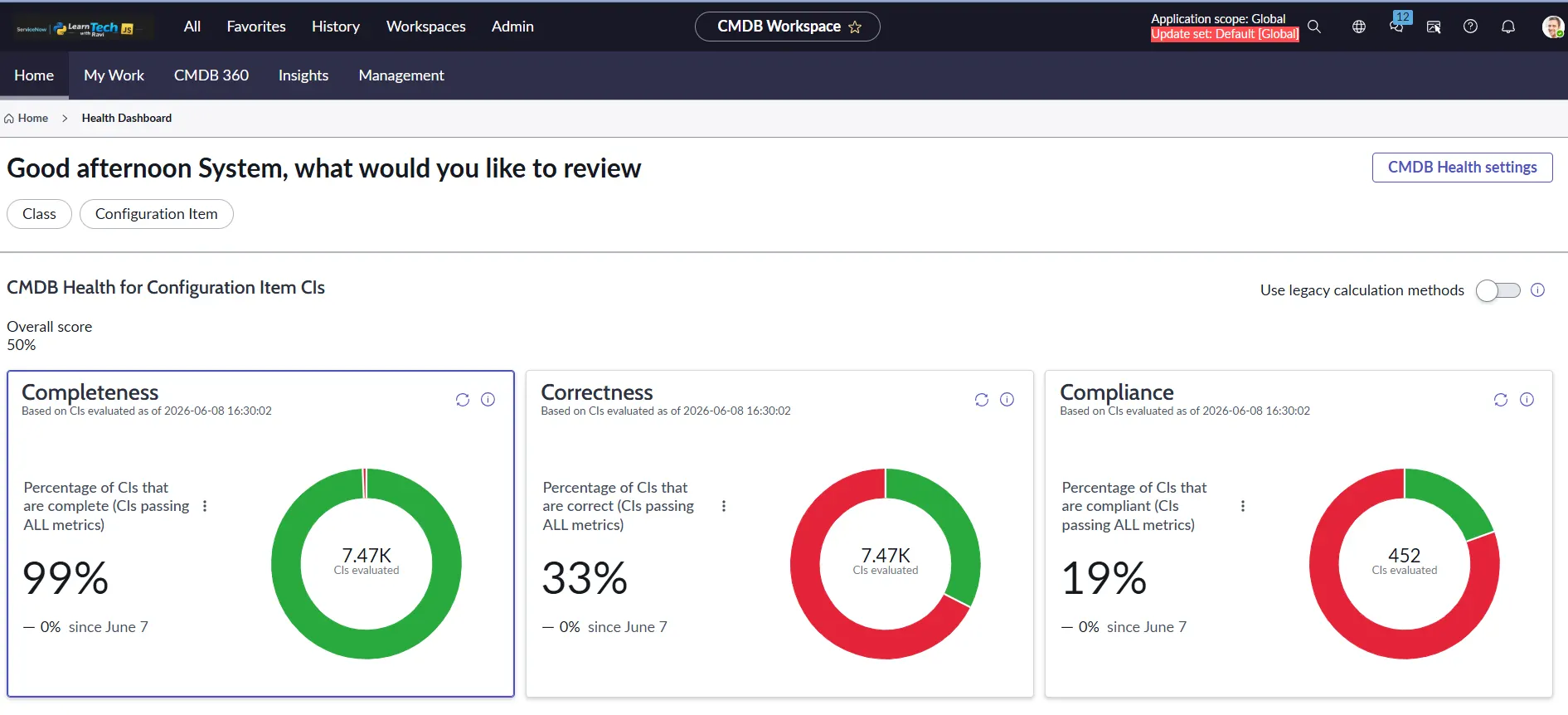
When reviewing CMDB Health with customers, I often encourage them to focus less on achieving a perfect score and more on understanding what the metrics are trying to reveal.
Correctness, Completeness, and Compliance are not just dashboard indicators. They provide insight into where data quality problems exist and help organizations prioritize remediation efforts.
Candidates should clearly understand:
- Correctness.
- Completeness.
- Compliance.
- Health calculations.
- Health improvement strategies.
Duplicate Remediation and Data Manager
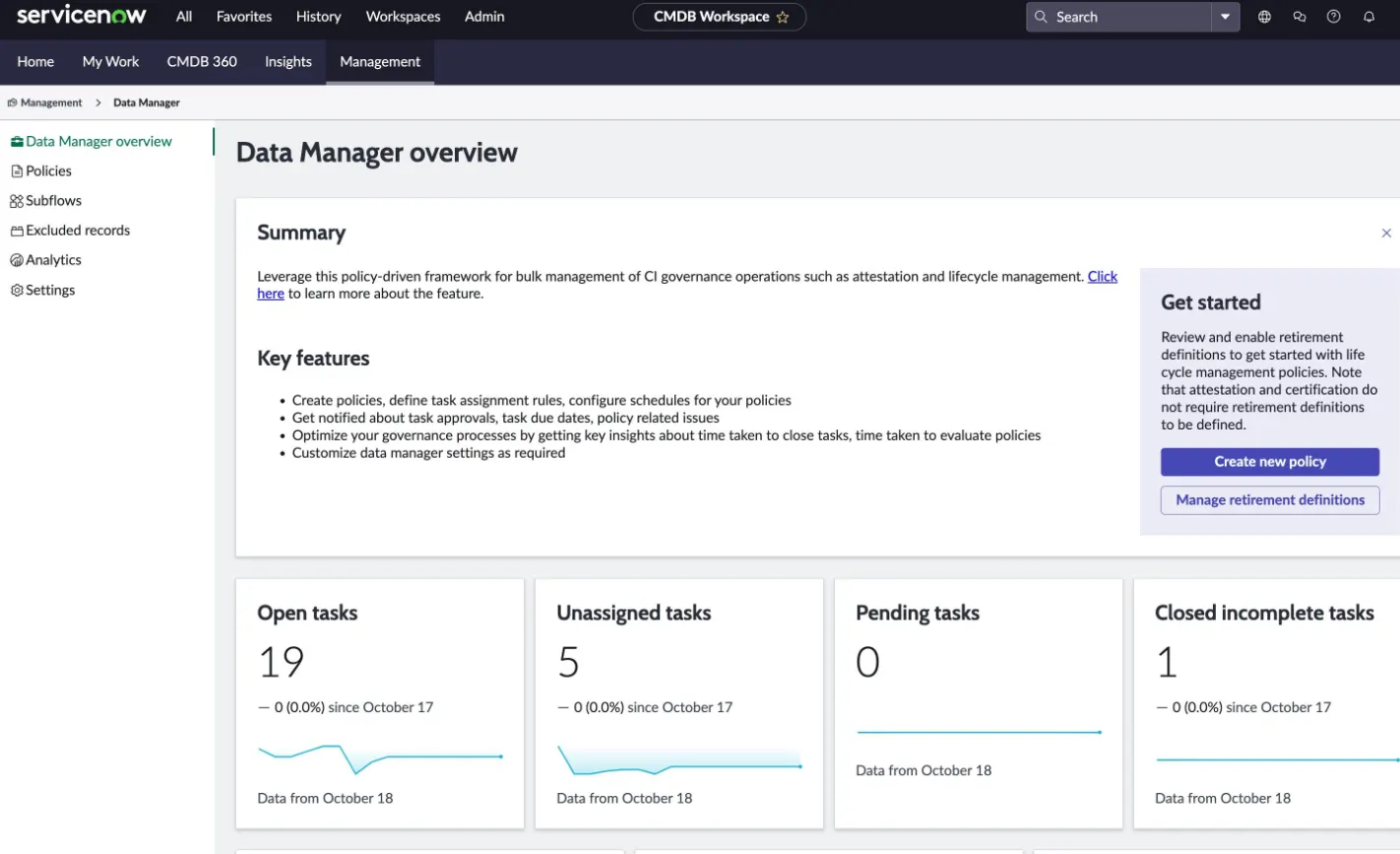
You should also understand:
- Why duplicates occur.
- Deduplication tasks.
- Remediation workflows.
- Data Manager policies.
- Governance roles and responsibilities.
Practical Preparation Tip
This section is heavily scenario-based.
Focus on:
- Governance workflows.
- Data quality improvement.
- Duplicate remediation.
- CMDB Health remediation.
- Operational ownership.
This domain focuses on how CMDB data delivers operational and business value.
Important topics include:
- Query Builder.
- Natural Language Query (NLQ).
- Unified Maps.
- Dependency views.
- Impact analysis.
- Reporting.
- Integrations with ITSM and SecOps.
The preparation notes also highlight:
- Query Builder.
- Unified Maps.
- Dependency visualization.
- Impact analysis workflows.
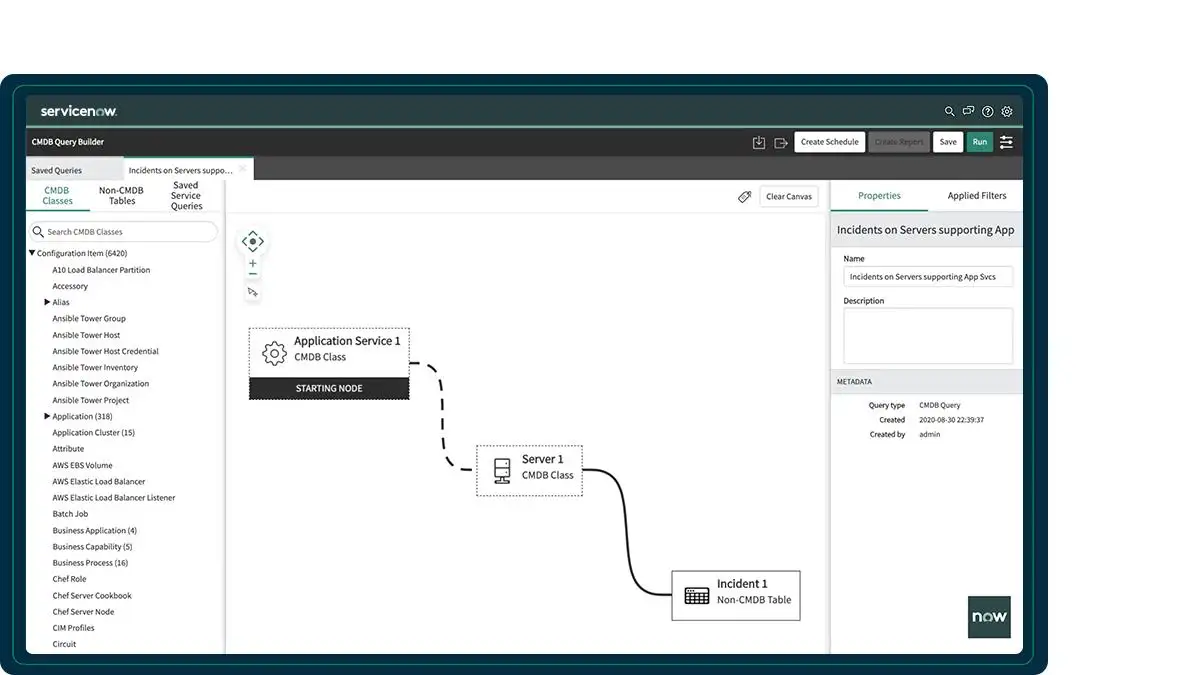
Query Builder and NLQ
This domain is often overlooked during preparation because candidates naturally gravitate toward Discovery and governance topics.
However, understanding how CMDB data is consumed is just as important as understanding how it is populated.
Query Builder, Unified Maps, and dependency visualizations help transform CMDB data into actionable business insights, which is ultimately the reason organizations invest in CMDB programs.
Candidates should understand:
- How to create saved queries.
- Query Builder usage.
- NLQ capabilities and limitations.
- Reporting use cases.
Unified Maps and Dependency Views
You should also understand:
- Dependency visualization.
- Service impact analysis.
- Unified Map use cases.
- Relationship-based impact tracking.
Practical Preparation Tip
Explore:
- Saved queries.
- Dependency maps.
- Impact analysis.
- Unified Map views.
- CMDB dashboards.
CSDM is often the area that intimidates candidates the most.
The framework introduces multiple domains, relationships, personas, and service structures, which can initially feel overwhelming.
My advice is simple: do not start by memorizing every table and relationship. Instead, focus on understanding the purpose of each domain and how they work together to create a consistent service model.
Once the underlying concepts become clear, the framework becomes significantly easier to navigate.
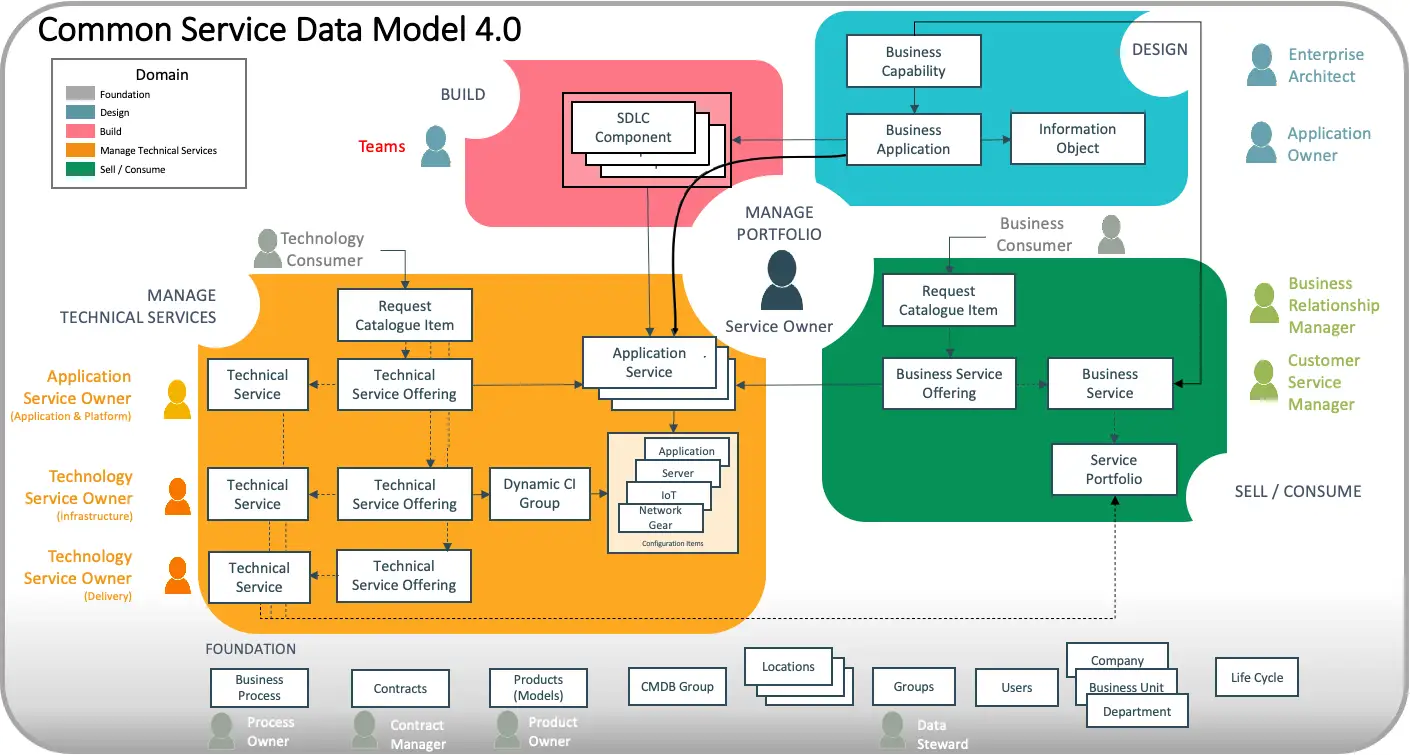
This section focuses on Common Service Data Model (CSDM) fundamentals.
Topics include:
- Product domain.
- Service domain.
- Technical domain.
- Information domain.
- Domain mapping.
- Stakeholder mapping.
- CSDM implementation approach.
The preparation notes explain:
- Domain relationships.
- Mapping across domains.
- CSDM implementation planning.
Understanding CSDM Domains
Candidates should understand:
- Purpose of each domain.
- Business application relationships.
- Technical service relationships.
- Service hierarchy.
Understanding Service Relationships
You should also understand:
- Service hierarchy.
- Domain relationships.
- Business-to-technical mapping.
- CSDM implementation principles.
How to Prepare for the Exam
If I were preparing for the CIS-Data Foundations, CMDB, and CSDM certification today, I would focus heavily on hands-on learning.
My personal approach would be:
- 70% practical exploration in a Personal Developer Instance.
- 30% documentation and exam blueprint review.
I would begin with Class Manager, relationships, and IRE. From there, I would move into Discovery, Service Graph Connectors, and CMDB Health before finishing with CSDM and governance concepts.
One of the biggest mistakes I see candidates make is trying to memorize content without understanding the business problem each capability is designed to solve.
The candidates who perform best are usually those who can connect technical concepts to real implementation scenarios.
Recommended 4-Week Study Plan
- Week 1: CMDB basics, CI classes, Relationships, IRE.
- Week 2: Discovery, MID Server, Service Graph Connectors.
- Week 3: CMDB Health, Governance, Data Manager.
- Week 4: CSDM, Query Builder, Revision, and Mock Questions.
Top Exam Tips
- Focus on practical understanding.
- Practice relationship scenarios.
- Spend time in CMDB Workspace.
- Understand duplicate remediation.
- Learn IRE concepts properly.
- Understand governance workflows.
- Explore Unified Maps and Query Builder.
- Connect CMDB concepts with real-world use cases.
Most importantly, avoid studying topics in isolation.
CMDB, Discovery, Governance, Relationships, IRE, and CSDM all work together as part of a single data foundation strategy.
For more tips, download our free eBook “How to Prepare for a ServiceNow Certification”:
Common Mistakes Candidates Make
Watch out for these common pitfalls:
- Focusing Only on Discovery: Many candidates assume this is mainly a Discovery certification. Governance and CMDB Health are equally important.
- Memorizing Without Hands-On Practice: Reading PDFs and notes alone is not enough.
- Ignoring Governance: Govern carries the highest exam weightage.
- Skipping CSDM: CSDM questions are often conceptual and tricky.
- Not Understanding Relationships: Relationship-based questions appear frequently throughout the exam.
Recommended Resources
- Certified Implementation Specialist – Data Foundations (CMDB and CSDM) Exam Details
- Now Learning Certification Overview and Registration
- Why the CIS – Data Foundations (CMDB and CSDM) Certification Matters
- Official CIS-DF Exam Specification Document
- ServiceNow University and Certification Portal
- Reddit Community Discussion on CIS-DF Preparation
Final Thoughts
If you’ve made it this far, you’re probably serious about building your CMDB and CSDM knowledge, and that’s exactly why I believe this certification is worth pursuing.
Over the years, I’ve worked with organizations at very different stages of their CMDB journey. Some had just started implementing Discovery, while others were managing millions of configuration items across complex environments. Interestingly, the challenges were often very similar. Duplicate records, unclear ownership, missing relationships, inconsistent service models, and questions around governance showed up again and again.
That is one of the reasons I believe ServiceNow introduced the CIS-Data Foundations, CMDB, and CSDM certification. The goal isn’t simply to test whether you know a feature or can remember a definition. It’s about helping professionals understand the foundations that make a CMDB trustworthy and useful.
If you’re coming from a traditional administration or development background, this certification helps you see the bigger picture. You’ll start understanding how Discovery, Service Graph Connectors, IRE, CMDB Health, governance, and CSDM all connect together to support business outcomes.
One question I get asked frequently is: “Is this certification worth it if I don’t work on CMDB every day?”
My answer is usually yes.
Even if your primary focus is ITSM, platform administration, development, or architecture, CMDB data sits at the center of many ServiceNow capabilities. The better you understand that data, the easier it becomes to design scalable solutions and make informed implementation decisions.
If you’re planning your certification journey, think of CIS-Data Foundations as a stepping stone rather than a destination. After this certification, you can continue exploring CMDB-focused micro-certifications, the CMDB Professional Suite, Discovery, Service Mapping, AIOps, and broader ITOM specializations. For architects and consultants, these skills become increasingly valuable as organizations continue investing in operational visibility and service-centric management.
My biggest piece of advice? Don’t treat this as an exam preparation exercise.
Open a Personal Developer Instance. Create relationships. Explore Class Manager. Review CMDB Health dashboards. Study how IRE works. Follow a CI from ingestion all the way through governance and reporting.
When you understand how the pieces fit together, the exam becomes much easier and, more importantly, the knowledge stays with you long after the certification is complete.
Good luck with your preparation. I hope this guide helps you not only pass the exam but also build a stronger foundation for your ServiceNow career.